
Big Tobacco’s big decoy: the 66 daily deaths today’s Senate Hearing must not ignore
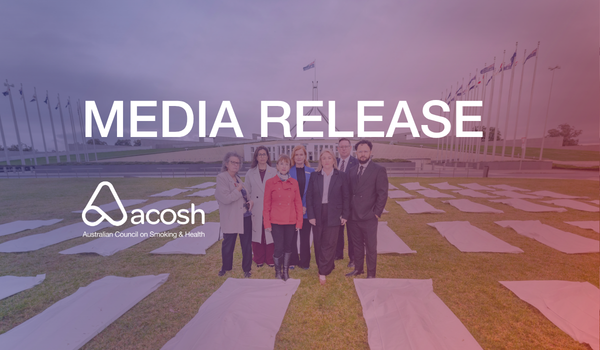
Sixty-six bodybags will be laid on the lawns of Parliament House today to represent the sixty-six Australians dying every day from tobacco.
Inside the building, at the first hearing of the Senate Inquiry into the Illegal Tobacco Crisis, health advocates will deliver a clear message: any solution that does not reduce smoking rates and deaths is a failure — and every discussion must be judged on whether it brings the 66 daily deaths down.
Tobacco lobbyists, and those influenced by them, say lowering the tobacco excise is necessary to disrupt illegal tobacco trade.
But Australian Council on Smoking and Health CEO Laura Hunter said this is a self-serving red herring from the tobacco industry.
“If you’re comfortable making all cigarettes cheaper, you’re comfortable with more people dying from smoking,” Ms Hunter said.
“You don’t tackle a public health crisis by engaging in a race to the bottom with criminals, making Australia’s deadliest product cheaper and more accessible. When cigarettes are cheaper, more people take them up, people already addicted smoke more, and fewer people quit.”
Ms Hunter said the solution lies in disrupting organised crime with stronger enforcement, tougher penalties, and a coordinated national response across supply, demand and enforcement.
She said the tobacco industry is employing predictable smokescreens to divert attention from the real issue, and politicians must remain focused on protecting the health and wellbeing of Australians.
“We need governments across the country to enact stronger legislation and beef up enforcement, making it much harder to sell illegal tobacco, much easier to get caught, and with much more serious consequences when you are.”
Ms Hunter said another major driver of smoking rates and the illicit tobacco market is the sheer oversupply of tobacco retailers across Australia.
“There are over 40,000 outlets selling tobacco in Australia — far more than essential services like supermarkets, petrol stations, and pharmacies,” Ms Hunter said.
“When cigarettes are this widely available, it normalises them and makes enforcement much more challenging.”
Today’s action is designed to confront the human cost.
“What we are doing today – laying 66 bodybags on the lawns of Parliament House – it is confronting, and it should be,” Ms Hunter said.
“These are 66 preventable deaths every single day, and the only question that matters is how we bring that number down.”
QUOTES FROM PARTICIPATING ORGANISATIONS
Cancer Council Australia CEO Jacinta Reddan said:
“Cancer Council Australia is calling for stronger licensing and enforcement, and for governments to work together to tackle illicit tobacco.
“Australia’s’ world-leading tobacco control measures, including plain packaging, tobacco excise and advertising bans have seen the number of Australians who smoke cut by more than half since 2001.
“Smoking is known to cause at least 16 types of cancer including cancer of the lung, mouth, liver, bladder, bowel, kidney and other organs.
“Two out of three Australians who continue to smoke will die as a result of nicotine and tobacco. The real crisis is that we continue to allow these deaths to happen.”
Lung Foundation Australia CEO Mark Brooke said:
“We know what works – stronger laws, more boots on the ground and penalties that actually hurt.
“Lung Foundation Australia’s advocacy is driven by the devastating, irreversible impact tobacco has on lung health. Illicit tobacco is not just a law enforcement issue, it’s a direct threat to public health. Cheap, untaxed and widely available products make it easier to start, harder to quit, and risk undoing years of progress.
An industry responsible for over seven million deaths globally each year, and whose products directly cause chronic disease, has no legitimate role in providing recommendations or advice to government, whether through committee hearings or by influencing policy via political donations.
“Tobacco products are uniquely addictive and hazardous. Their widespread commercial availability is the result of decades of industry misinformation, concealment of harms, and manipulation of scientific evidence.”
MEDIA CONTACT: Iona Salter, 0413 185 634 or iona.salter@essentialmedia.com.au
For those looking to quit smoking or vaping, visit quit.org.au or call quit 13 78 48 for free confidential advice and support.
ACOSH is an independent, non-government, not for profit coalition which represents 31 prominent health, research, social service and community organisations with a shared concern about smoking and vaping and their harmful consequences.
ACOSH has been a leading advocate for all the regulatory and legislative changes to reduce the impact of smoking on the Australian community and is supported by the Healthway – the Western Australian Health Promotion Foundation.